
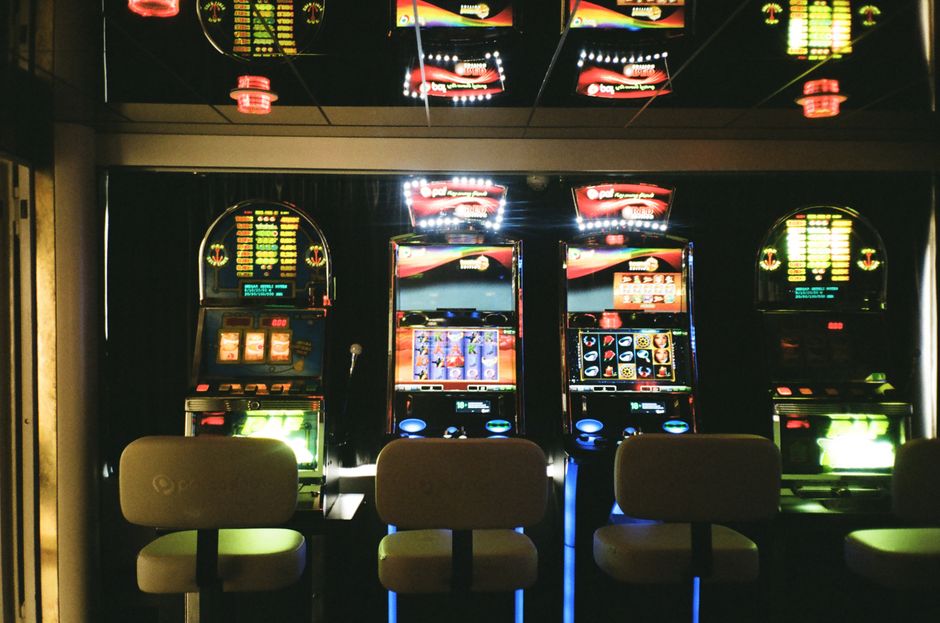
You've just watched a streamer turn $200 into five figures on a slot you've been grinding for a week. You load the same game, same bet size, and your balance evaporates in ninety minutes. Nothing was rigged. Nothing was "due." You simply walked into a math model you never bothered to understand: volatility.
Most players obsess over RTP, the return-to-player percentage, and treat it like a grade on a report card. A 96% RTP slot must be better than a 94% one, right? In the long run, sure. But the long run is measured in millions of spins, not your Tuesday night session. Volatility is what you actually feel, and it's the single most underrated concept in online casino play. Let's pull it apart properly.
RTP tells you the average return over an infinite sample. Volatility (sometimes called variance) tells you how that return gets delivered. Two slots can share the same 96% RTP and feel completely different.
Here's the concrete part: a high-volatility slot with a 96.5% RTP can still eat 80% of a $500 bankroll across 400 spins at $1 per spin. That's not bad luck. That's the distribution doing exactly what it's designed to do.
Say a slot has a 96% RTP and you spin $1,000 total. The expected loss is $40. But expectations are averages, not promises. Variance means your real result could be minus $300 or plus $250. The wider the variance (higher volatility), the wider that spread.
This is why bankroll management isn't optional. A useful rule of thumb: your session bankroll should be at least 100x your average bet on medium volatility and 200-300x on high volatility. If you're spinning $0.50 on a brutal Megaways title, a $150 bankroll is reasonable. A $50 bankroll is entertainment money you've already decided to spend.
And no, changing machines doesn't reset anything. Slots have no memory. A machine that hasn't paid in four hours is not "warming up." That's the gambler's fallacy, and it's the most expensive belief in the building. For more on this, see SHBET.
Before your first spin, spend sixty seconds in the paytable and the game info screen. You're looking for three things:
This one habit separates players who understand what they're buying from players who just push the button and pray.
The same concept governs other iGaming verticals.
In poker, cash games have low variance if you play tight and grind small pots. Tournaments are the high-volatility slot machine of poker: you can play perfectly for eight hours and bust on a coin flip. That's why pros separate their cash bankroll (maybe 20-30 buy-ins) from their tournament bankroll (often 100+ buy-ins). Variance in MTTs is brutal and unavoidable.
In sports betting, a -110 spread bet is relatively low variance because the house edge is thin and outcomes are near-even. A 10-leg parlay paying 500-1 has lottery-level variance and a much fatter house edge. Bookmakers love parlays for exactly that reason: high variance plus high margin is a beautiful combination for them.
Even blackjack splits into low-variance basic strategy play and high-variance side bets like Perfect Pairs, which can carry a house edge north of 5%. Same table, wildly different risk profiles.
The right volatility depends on your goal, not on what's trending on Twitch.
Also worth knowing: some regions and licensed operators let you test games in demo mode before staking real money. If you're new to a provider's style, spin 200 free spins on the demo and watch how your virtual balance behaves. You'll learn more about volatility in ten minutes than in ten hours of forum reading. It is also worth checking SH BET before deciding.
Volatility is not a flaw in slot design. It's the entire product. The thrill of a high-variance game exists precisely because it can hand you a life-changing multiplier or strip you bare with equal indifference. Understanding that doesn't make you luckier. It makes you deliberate, and deliberate players lose less, last longer, and are far less likely to chase losses at 3 a.m. into a game they never understood in the first place.
So before your next session, do the boring work: check the RTP, check the max win, size your bankroll to the variance, and decide in advance what a loss looks like. That's not pessimism. That's the only edge a casino player actually owns.

Hi, my name is Anthony kuber. I am artist and fashion designer.
I love to travel and writing blogging.
Your email address will not be published. Required fields are marked *
Software Developer & Writer
Hey, I'm Diva, a developer and writer blending code and creativity. I'm driven by a deep curiosity and a relentless pursuit of excellence. Join me as I craft digital solutions and captivating stories.


